





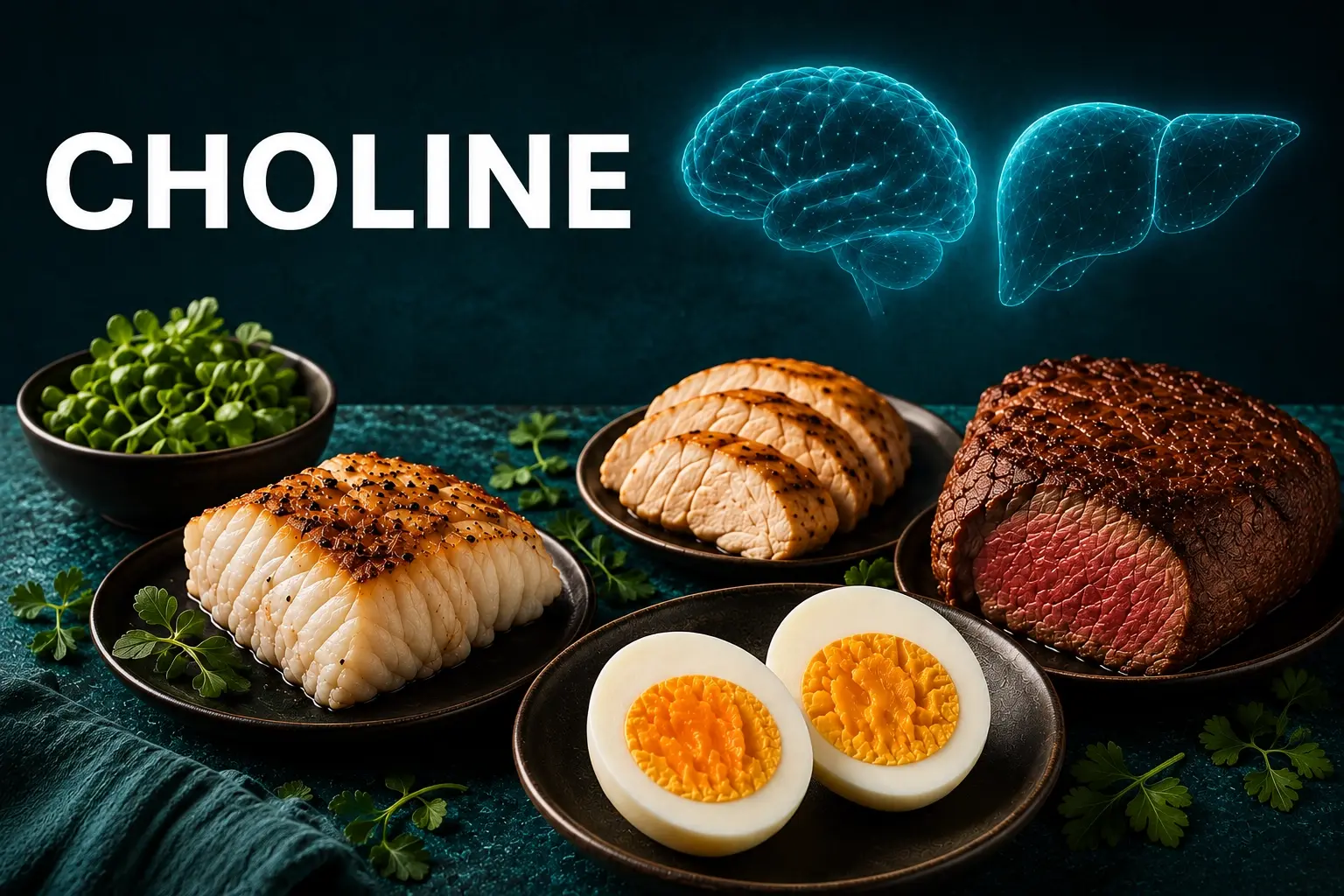
We are used to looking for memory support in coffee, vitamins, and supplements. Yet many people have never heard of one of the nutrients the brain and nervous system need to function properly. That nutrient is choline. It helps transmit nerve signals, supports muscle movement, and plays an important role in liver health. Despite this, a large share of the population gets less choline from food than the established daily intake guidelines.
Choline is often described as a vitamin-like substance and is sometimes loosely associated with the B vitamin family. More accurately, it is an essential nutrient. The liver can produce a limited amount of choline, but this is usually not enough to meet the body's needs. The rest must come from food.
Why is choline so important? First, the body uses it to produce acetylcholine, a neurotransmitter that allows nerve cells to communicate. Acetylcholine is involved in memory, muscle control, mood regulation, and other functions of the brain and nervous system. However, this does not mean that every choline supplement will automatically improve memory. Choline itself is essential, but there is still no convincing evidence that supplements significantly improve cognitive performance in healthy adults.
Choline is also needed to produce phosphatidylcholine and sphingomyelin, two major components of cell membranes. Without enough choline, cells have more difficulty maintaining their structure and communicating normally. Choline also participates in the transport and metabolism of fats, especially in the liver.
When choline intake becomes too low, fat can accumulate in the liver. A severe deficiency may lead to liver and muscle damage. Most people in the United States consume less choline than the established intake guidelines, although a clear clinical deficiency is uncommon in healthy adults. The body's own limited production of choline probably offers some protection, but that does not make the quality of a person's diet unimportant.
The adequate intake level for adult men is 550 mg per day. For adult women, it is 425 mg. The guideline rises to 450 mg during pregnancy and 550 mg while breastfeeding. Individual needs can vary with age, sex, metabolism, pregnancy, and certain genetic differences.
One of the most accessible sources of choline is found in almost every refrigerator. One large hard-boiled egg contains about 147 mg. Two eggs provide approximately 294 mg, which is more than half of the daily guideline for a man and roughly two-thirds of the guideline for a woman. Most of the choline is concentrated in the yolk, so an egg-white omelet provides far less choline than a whole egg.
Eggs are not the only option. A 3 ounce serving of cooked lean beef contains about 117 mg of choline. The same serving of roasted chicken breast provides approximately 72 mg, while cooked cod offers about 71 mg. Beef liver is especially rich in choline. A 3 ounce serving can contain around 356 mg, although liver is not suitable for everyone and is not usually eaten every day.
Choline is also available from plant foods. Half a cup of roasted soybeans contains about 107 mg. One large baked red potato provides approximately 57 mg, while one cup of cooked quinoa contains around 43 mg. Half a cup of kidney beans offers about 45 mg. The same serving of Brussels sprouts contains 32 mg, and broccoli provides 31 mg. Smaller amounts are found in nuts, seeds, whole grains, cauliflower, and green peas. A person can obtain choline without eating meat, but it requires more attention to food combinations and total daily intake.
In practice, meeting the goal can be easier than it sounds. Two eggs at breakfast provide about 294 mg. A serving of chicken at lunch adds approximately 72 mg. A cup of milk contributes about 43 mg, and a side of broccoli adds another 31 mg. Together, these foods provide roughly 440 mg, not counting the choline found in bread, grains, vegetables, and other foods eaten during the day. This is not a universal meal plan, but it shows that choline does not always need to come from a supplement bottle.
Pregnant and breastfeeding women should pay particular attention to choline. It contributes to the early development of a baby's brain and nervous system, yet many prenatal supplements contain little or no choline. This does not mean that high doses should be taken without guidance. Diet and supplement use should be discussed with a healthcare professional.
People following a strict plant-based diet can turn to soy, beans, quinoa, potatoes, broccoli, cabbage, peanuts, seeds, and whole grains. Plant sources generally contain less choline per serving than eggs or meat, so it is useful to obtain the nutrient from several foods throughout the day.
Should choline be taken as a separate supplement? The first step is to look at the usual diet. Supplements may be helpful when it is difficult to obtain enough choline from food or when a qualified professional recommends them. Research has not established that any single form of choline is universally better than the others. Consumers should also be cautious about promises that choline can instantly improve memory, cure fatty liver disease, or prevent dementia. Such claims go beyond the current evidence.
More is not always better. The tolerable upper intake level for adults is 3,500 mg per day from all sources. Very high intake can cause a fishy body odor, nausea, excessive sweating and salivation, low blood pressure, and liver damage. Reaching that amount through a varied diet is difficult, but concentrated supplements make excessive intake more possible. Dosage should never be chosen according to the idea that more must be healthier.
Choline is not a miracle pill for the brain. Its value is more fundamental. Every day, it helps the nervous system transmit signals, supports cell membranes, allows muscles to function, and helps the liver handle fats. The body can make a small amount, but it still relies on food.
Choline is often described as a vitamin-like substance and is sometimes loosely associated with the B vitamin family. More accurately, it is an essential nutrient. The liver can produce a limited amount of choline, but this is usually not enough to meet the body's needs. The rest must come from food.
Why is choline so important? First, the body uses it to produce acetylcholine, a neurotransmitter that allows nerve cells to communicate. Acetylcholine is involved in memory, muscle control, mood regulation, and other functions of the brain and nervous system. However, this does not mean that every choline supplement will automatically improve memory. Choline itself is essential, but there is still no convincing evidence that supplements significantly improve cognitive performance in healthy adults.
Choline is also needed to produce phosphatidylcholine and sphingomyelin, two major components of cell membranes. Without enough choline, cells have more difficulty maintaining their structure and communicating normally. Choline also participates in the transport and metabolism of fats, especially in the liver.
When choline intake becomes too low, fat can accumulate in the liver. A severe deficiency may lead to liver and muscle damage. Most people in the United States consume less choline than the established intake guidelines, although a clear clinical deficiency is uncommon in healthy adults. The body's own limited production of choline probably offers some protection, but that does not make the quality of a person's diet unimportant.
The adequate intake level for adult men is 550 mg per day. For adult women, it is 425 mg. The guideline rises to 450 mg during pregnancy and 550 mg while breastfeeding. Individual needs can vary with age, sex, metabolism, pregnancy, and certain genetic differences.
One of the most accessible sources of choline is found in almost every refrigerator. One large hard-boiled egg contains about 147 mg. Two eggs provide approximately 294 mg, which is more than half of the daily guideline for a man and roughly two-thirds of the guideline for a woman. Most of the choline is concentrated in the yolk, so an egg-white omelet provides far less choline than a whole egg.
Eggs are not the only option. A 3 ounce serving of cooked lean beef contains about 117 mg of choline. The same serving of roasted chicken breast provides approximately 72 mg, while cooked cod offers about 71 mg. Beef liver is especially rich in choline. A 3 ounce serving can contain around 356 mg, although liver is not suitable for everyone and is not usually eaten every day.
Choline is also available from plant foods. Half a cup of roasted soybeans contains about 107 mg. One large baked red potato provides approximately 57 mg, while one cup of cooked quinoa contains around 43 mg. Half a cup of kidney beans offers about 45 mg. The same serving of Brussels sprouts contains 32 mg, and broccoli provides 31 mg. Smaller amounts are found in nuts, seeds, whole grains, cauliflower, and green peas. A person can obtain choline without eating meat, but it requires more attention to food combinations and total daily intake.
In practice, meeting the goal can be easier than it sounds. Two eggs at breakfast provide about 294 mg. A serving of chicken at lunch adds approximately 72 mg. A cup of milk contributes about 43 mg, and a side of broccoli adds another 31 mg. Together, these foods provide roughly 440 mg, not counting the choline found in bread, grains, vegetables, and other foods eaten during the day. This is not a universal meal plan, but it shows that choline does not always need to come from a supplement bottle.
Pregnant and breastfeeding women should pay particular attention to choline. It contributes to the early development of a baby's brain and nervous system, yet many prenatal supplements contain little or no choline. This does not mean that high doses should be taken without guidance. Diet and supplement use should be discussed with a healthcare professional.
People following a strict plant-based diet can turn to soy, beans, quinoa, potatoes, broccoli, cabbage, peanuts, seeds, and whole grains. Plant sources generally contain less choline per serving than eggs or meat, so it is useful to obtain the nutrient from several foods throughout the day.
Should choline be taken as a separate supplement? The first step is to look at the usual diet. Supplements may be helpful when it is difficult to obtain enough choline from food or when a qualified professional recommends them. Research has not established that any single form of choline is universally better than the others. Consumers should also be cautious about promises that choline can instantly improve memory, cure fatty liver disease, or prevent dementia. Such claims go beyond the current evidence.
More is not always better. The tolerable upper intake level for adults is 3,500 mg per day from all sources. Very high intake can cause a fishy body odor, nausea, excessive sweating and salivation, low blood pressure, and liver damage. Reaching that amount through a varied diet is difficult, but concentrated supplements make excessive intake more possible. Dosage should never be chosen according to the idea that more must be healthier.
Choline is not a miracle pill for the brain. Its value is more fundamental. Every day, it helps the nervous system transmit signals, supports cell membranes, allows muscles to function, and helps the liver handle fats. The body can make a small amount, but it still relies on food.
Sometimes taking better care of your health begins not with a rare supplement, but with a closer look at an ordinary plate. Eggs, fish, chicken, beef, dairy products, beans, and vegetables can provide a substantial share of daily choline needs without complicated routines. Look at the foods you eat regularly and ask yourself one simple question: Is your body getting enough choline each day?