





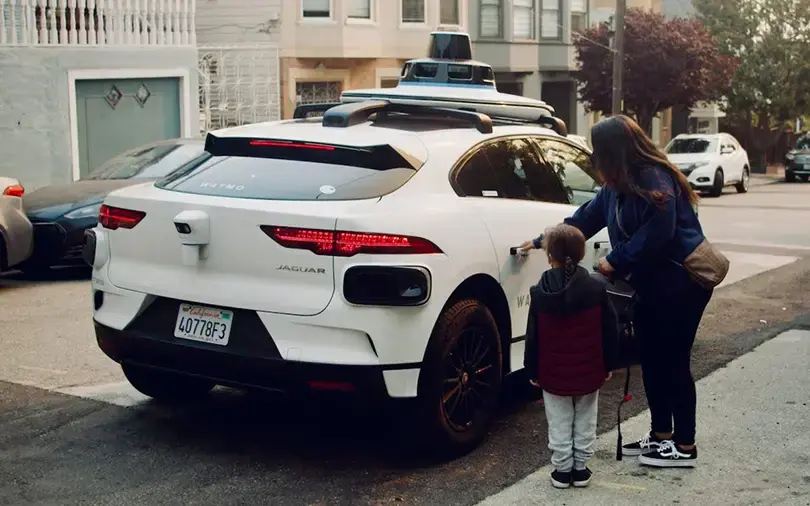
On January 9, 2026, the streets of San Francisco once again became a place of transport conflict. Uber and Lyft drivers gathered for a protest against Waymo’s self driving taxis, saying the rules are unfair and safety risks remain.
San Francisco has always been more than just a city. It is a testing ground for the future. New technologies arrive here first. They create fear, spark debate, and then quietly become part of everyday life. This is where startups changed the world, where old industries were disrupted, and where new professions were born.
Now the city is facing another familiar clash. Humans versus algorithms.
At first glance, the protests are about safety. But if you look deeper, they are really about work, fairness, and survival in a city where the cost of living keeps rising and technology moves faster than people can adapt.
When Safety Becomes the Language of Fear
The official message from driver unions sounds reasonable. They are asking regulators to remove robotaxis from the streets until safety and responsibility issues are resolved. Their main argument is simple. Self driving cars are not held to the same strict standards as human drivers.
Human drivers must be licensed, insured, trained, and personally responsible for mistakes. Algorithms do not face those same expectations.
Safety does matter. Any new technology must prove it can protect passengers and pedestrians. But history shows that safety concerns often become louder when people feel their jobs are under threat.
For thousands of Uber and Lyft drivers, driving is not a side hobby. It is their main source of income. A way to survive in one of the most expensive cities in America. A robotaxi does not get tired. It does not take breaks. It does not ask for tips. It simply keeps driving.
A Strong Sense of Déjà Vu
What makes this moment so striking is that San Francisco has seen it before.
Thirteen years earlier, in 2013, traditional taxi drivers protested in the same city. Back then, the target was Uber and Lyft. Taxi drivers accused the apps of operating outside the law, undercutting prices, and putting passengers at risk.
Uber and Lyft were called illegal. They were blamed for destroying an industry. Many believed the government had a duty to protect traditional taxi services.
Today, that chapter feels almost ironic. Uber and Lyft did not disappear. They became the new standard. The industry changed, the rules adjusted, and most people moved on.
Why Convenience Usually Wins
From the perspective of 2026, the outcome of that earlier fight seems inevitable.
Uber won not because it was perfect, but because it was easier. Passengers liked clear prices, fast booking, cashless payments, and real time tracking. They valued convenience more than tradition.
Regulators eventually adapted. Laws changed. Even many taxi drivers joined the platforms they once opposed. Technology did not ask permission. It simply solved problems in a way people preferred.
Robotaxis Are the Next Step, Not a Mistake
Today, Waymo’s self driving taxis are at a similar stage. They are not flawless. They make mistakes. Many people do not fully trust them yet. But in the long run, they represent a direction that is hard to stop.
Automation has already transformed many industries. Airplanes fly mostly on autopilot. Subways in many countries operate without drivers. Warehouses, factories, and logistics systems rely on algorithms.
Road transport was always going to be next.
Self driving cars are not science fiction. They are a logical continuation of decades of automation.
Different Rules or a Different Era
One of the strongest emotional arguments from protesters is about fairness. Why must human drivers follow strict rules while machines do not?
It is a fair question. But history suggests the answer is not banning technology. The answer is rewriting the rules.
When cars first appeared, pedestrians protested them. When elevators became automated, people feared riding without an operator. Every major innovation starts as something dangerous and unfamiliar.
Over time, standards evolve.
Who Actually Benefits From This Change
If we step back from the emotions, the biggest winners are not corporations or unions. They are city residents.
Fewer accidents. Less human error. More predictable traffic. Potentially lower prices. For crowded cities, these benefits matter.
This does not mean society should ignore workers who lose income. Governments must help people transition. But trying to freeze progress to protect existing jobs has never worked in the long run.
A Lesson We Keep Refusing to Learn
The most ironic part of this story is that Uber and Lyft drivers now sound very similar to the taxi drivers who once protested against them.
At the time, those taxi drivers believed their world was ending. Today, many people look back on those protests with a smile.
In a few years, today’s debates about robotaxis may feel just as outdated. New jobs will appear. Fleet supervisors. AI safety specialists. Autonomous vehicle operators.
The Future Does Not Ask for Permission
Every transportation revolution in the United States has been painful. But it has always moved in the same direction. Toward efficiency, speed, and convenience.
San Francisco is once again the stage for a battle between the present and the future. And history suggests that the winner will not be the loudest voice in the street, but the solution that best serves everyday people.