





Have you ever thought that you could accidentally break the law just because… you took a bath? 😳
California is supposed to be one of the most modern and free places on Earth. This is where people build future technologies, test robots, launch rockets into space, and talk about artificial intelligence like it’s already part of the family. But there’s one thing almost nobody talks about.
Some laws here still sound like they were written by a very tired comedy writer.
And the craziest part is that some of them were never officially removed.
Imagine moving to sunny California. Palm trees 🌴, ocean views, freedom, surfing, startups, nine dollar coffee, and endless conversations about self care. Then one day you find out there are places where perfectly normal things are technically forbidden because at some point someone decided: “Nope. Humanity has gone too far.”
For example, in one California city it is illegal to eat frogs that died during frog jumping competitions.
Yes. That is a real law.
It’s hard to even imagine what kind of story forced people to officially write that into legislation. But honestly, it perfectly explains America. Here, every bizarre situation eventually becomes paperwork.
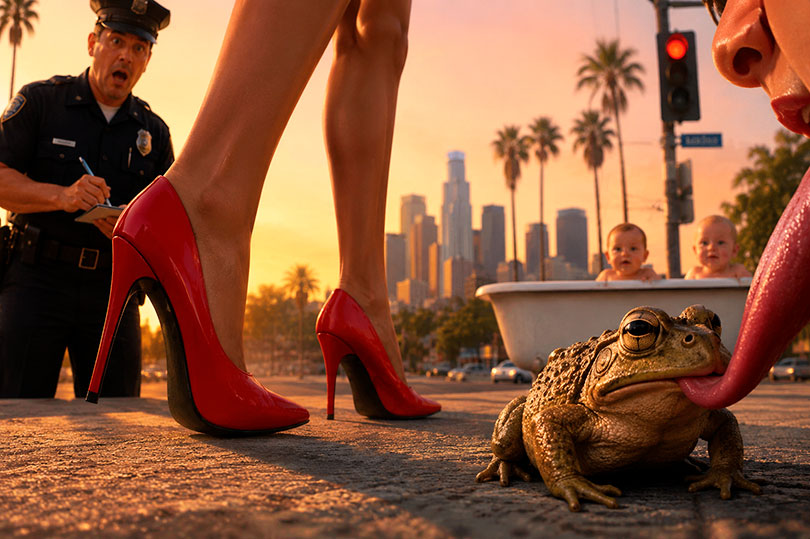
Another masterpiece. In Carmel, women technically cannot wear high heels over a certain height without a permit.
A permit. For high heels.
And no, this is not a TikTok joke.
Most people laugh the first time they hear it. Then they discover the reason behind it. The streets in Carmel are uneven. Tourists kept falling, getting injured, and filing lawsuits. So instead of fixing the sidewalks, officials came up with the most American solution possible: regulate the shoes.
And suddenly you realize something important.
Most weird laws do not exist because people are stupid. They exist because humanity is constantly trying to control chaos.
And the more you read these stories, the clearer it becomes: the world is far stranger than we pretend it is.
For example, California once had a law banning nuclear devices inside the city of Chico. The punishment was a 500 dollar fine.
Just imagine the optimism of the person who thought: “If someone detonates a nuclear bomb, the important thing is making sure they pay the fine.”
At that point it stops feeling like legislation and starts feeling like an accidental meme that somehow entered the legal system.
But it gets even better.
In Los Angeles, licking frogs is illegal.
Half the internet instantly reacts with: “Who would even do that?”
Turns out… enough people did.
Some frogs produce toxins that can cause hallucinations. Officials apparently decided not to wait until someone turned it into a California wellness trend and banned it entirely.
And this is where things get really interesting.
When you read all these laws together, at first you laugh. Then you get confused. Then something strange happens.
You start recognizing yourself in all of it.
Because modern life is full of the exact same absurdity.
We live in a world where coffee cups need warning labels saying “Caution: hot beverage.” People sue companies because a microwave was “not suitable” for drying a cat. Shampoo instructions are sometimes longer than school essays.
Humanity has become so used to absurdity that we barely notice it anymore.
And California is probably the perfect symbol of that reality.
Technology is moving at insane speed, but right next to the office of a company building artificial intelligence, there may still be a century old law about heels, frogs, or bathtubs.
Speaking of bathtubs.
One California town once had a law that made it illegal for two babies to bathe in the same tub at the same time.
Try imagining the exact moment in history that forced lawmakers to create that rule.
That’s why stories like this spread so fast online. People do not share them only because they are funny. They share them because these stories create a very rare feeling.
The feeling that the world is not nearly as serious as it pretends to be.
Especially today.
Everyone is constantly talking about productivity, success, discipline, investing, optimization, self improvement, and becoming “the best version of yourself.” The human brain gets exhausted from all this endless seriousness.
Then suddenly someone reads about a law banning something completely ridiculous and genuinely laughs for the first time that day.
It becomes a tiny psychological break.
A reminder that humanity has always been weird.
And probably always will be.
Another legendary example. In some parts of California, it was supposedly illegal to whistle underwater.
Do not even ask.
People still debate whether that law officially existed or if it was just an urban legend. But honestly, the popularity of the story says everything. Humans are obsessed with things that break patterns.
Our brains love surprise.
That is exactly why weird laws go viral. They create the perfect emotional cocktail: shock, humor, disbelief, and the immediate urge to send it to someone with the message: “You have to see this.”
But there is another reason these stories hit so hard.
They make authority feel… human.
Most people think of government as something giant, cold, and distant. But weird laws suddenly reveal the opposite. Behind every strange rule there is usually an ordinary human story. Somebody’s mistake. Somebody’s panic. Somebody’s unbelievably bad day.
Maybe one person really did walk through town in giant heels, fall dramatically, and create such chaos that local officials collectively said: “That’s it. We are regulating shoes now.”
And decades later millions of people are laughing about it online.
One random moment of chaos became part of history.
Isn’t that kind of amazing?
Now here comes the most interesting part.
Most people assume weird laws belong to the past. To old movies. Tiny towns. Strange history books.
But if you look closely, modern society is still creating absurd rules every single day.
Today people get banned online over the wrong sentence. Algorithms decide what we see every morning. Phones know more about us than some of our closest friends. Millions of people agree to user agreements longer than novels without reading a single line.
Fifty years from now, all of this will probably look completely insane too.
And maybe future generations will laugh at us the same way we laugh at laws about licking frogs.
Because every generation secretly believes it has finally become rational.
Then time passes.
And humanity turns out to be just as strange as ever.
Maybe that is actually the most honest part of being human.
Not perfection.
Not logic.
Not control.
But these ridiculous little stories that remind us the world is still alive, messy, emotional, random, and deeply human.
And maybe the weirdest law in California was never about frogs or high heels at all.
Maybe it was the invisible rule adults created somewhere along the way: the idea that life is supposed to be serious all the time.
California is supposed to be one of the most modern and free places on Earth. This is where people build future technologies, test robots, launch rockets into space, and talk about artificial intelligence like it’s already part of the family. But there’s one thing almost nobody talks about.
Some laws here still sound like they were written by a very tired comedy writer.
And the craziest part is that some of them were never officially removed.
Imagine moving to sunny California. Palm trees 🌴, ocean views, freedom, surfing, startups, nine dollar coffee, and endless conversations about self care. Then one day you find out there are places where perfectly normal things are technically forbidden because at some point someone decided: “Nope. Humanity has gone too far.”
For example, in one California city it is illegal to eat frogs that died during frog jumping competitions.
Yes. That is a real law.
It’s hard to even imagine what kind of story forced people to officially write that into legislation. But honestly, it perfectly explains America. Here, every bizarre situation eventually becomes paperwork.
Another masterpiece. In Carmel, women technically cannot wear high heels over a certain height without a permit.
A permit. For high heels.
And no, this is not a TikTok joke.
Most people laugh the first time they hear it. Then they discover the reason behind it. The streets in Carmel are uneven. Tourists kept falling, getting injured, and filing lawsuits. So instead of fixing the sidewalks, officials came up with the most American solution possible: regulate the shoes.
And suddenly you realize something important.
Most weird laws do not exist because people are stupid. They exist because humanity is constantly trying to control chaos.
And the more you read these stories, the clearer it becomes: the world is far stranger than we pretend it is.
For example, California once had a law banning nuclear devices inside the city of Chico. The punishment was a 500 dollar fine.
Just imagine the optimism of the person who thought: “If someone detonates a nuclear bomb, the important thing is making sure they pay the fine.”
At that point it stops feeling like legislation and starts feeling like an accidental meme that somehow entered the legal system.
But it gets even better.
In Los Angeles, licking frogs is illegal.
Half the internet instantly reacts with: “Who would even do that?”
Turns out… enough people did.
Some frogs produce toxins that can cause hallucinations. Officials apparently decided not to wait until someone turned it into a California wellness trend and banned it entirely.
And this is where things get really interesting.
When you read all these laws together, at first you laugh. Then you get confused. Then something strange happens.
You start recognizing yourself in all of it.
Because modern life is full of the exact same absurdity.
We live in a world where coffee cups need warning labels saying “Caution: hot beverage.” People sue companies because a microwave was “not suitable” for drying a cat. Shampoo instructions are sometimes longer than school essays.
Humanity has become so used to absurdity that we barely notice it anymore.
And California is probably the perfect symbol of that reality.
Technology is moving at insane speed, but right next to the office of a company building artificial intelligence, there may still be a century old law about heels, frogs, or bathtubs.
Speaking of bathtubs.
One California town once had a law that made it illegal for two babies to bathe in the same tub at the same time.
Try imagining the exact moment in history that forced lawmakers to create that rule.
That’s why stories like this spread so fast online. People do not share them only because they are funny. They share them because these stories create a very rare feeling.
The feeling that the world is not nearly as serious as it pretends to be.
Especially today.
Everyone is constantly talking about productivity, success, discipline, investing, optimization, self improvement, and becoming “the best version of yourself.” The human brain gets exhausted from all this endless seriousness.
Then suddenly someone reads about a law banning something completely ridiculous and genuinely laughs for the first time that day.
It becomes a tiny psychological break.
A reminder that humanity has always been weird.
And probably always will be.
Another legendary example. In some parts of California, it was supposedly illegal to whistle underwater.
Do not even ask.
People still debate whether that law officially existed or if it was just an urban legend. But honestly, the popularity of the story says everything. Humans are obsessed with things that break patterns.
Our brains love surprise.
That is exactly why weird laws go viral. They create the perfect emotional cocktail: shock, humor, disbelief, and the immediate urge to send it to someone with the message: “You have to see this.”
But there is another reason these stories hit so hard.
They make authority feel… human.
Most people think of government as something giant, cold, and distant. But weird laws suddenly reveal the opposite. Behind every strange rule there is usually an ordinary human story. Somebody’s mistake. Somebody’s panic. Somebody’s unbelievably bad day.
Maybe one person really did walk through town in giant heels, fall dramatically, and create such chaos that local officials collectively said: “That’s it. We are regulating shoes now.”
And decades later millions of people are laughing about it online.
One random moment of chaos became part of history.
Isn’t that kind of amazing?
Now here comes the most interesting part.
Most people assume weird laws belong to the past. To old movies. Tiny towns. Strange history books.
But if you look closely, modern society is still creating absurd rules every single day.
Today people get banned online over the wrong sentence. Algorithms decide what we see every morning. Phones know more about us than some of our closest friends. Millions of people agree to user agreements longer than novels without reading a single line.
Fifty years from now, all of this will probably look completely insane too.
And maybe future generations will laugh at us the same way we laugh at laws about licking frogs.
Because every generation secretly believes it has finally become rational.
Then time passes.
And humanity turns out to be just as strange as ever.
Maybe that is actually the most honest part of being human.
Not perfection.
Not logic.
Not control.
But these ridiculous little stories that remind us the world is still alive, messy, emotional, random, and deeply human.
And maybe the weirdest law in California was never about frogs or high heels at all.
Maybe it was the invisible rule adults created somewhere along the way: the idea that life is supposed to be serious all the time.
Even though reality has always been one giant collection of chaos, weird rules, random accidents, and stories people send each other late at night saying:
“I can’t believe this is real.”
And if you really think about it… maybe that’s exactly what makes us human 🙂