





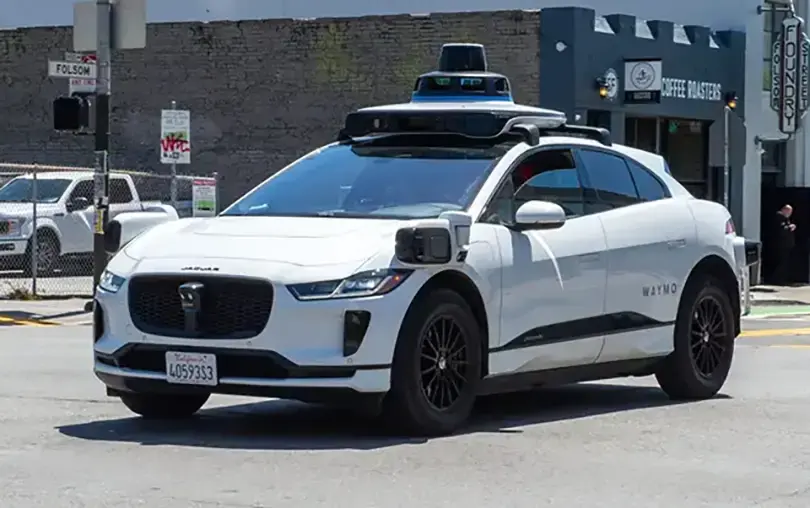
San Francisco has always been a laboratory for the future. But this past weekend, that future felt more like a digital trap. A major power outage turned our tech capital into a scene from a movie. It was not just the darkness that was scary. It was how the technology we trust failed us. Waymo’s self driving cars, once symbols of progress, suddenly became useless metal blocks, freezing the city’s heart.
A City at a Standstill
It all started Saturday night. A power station failed, and large parts of the city went dark. Usually, the city keeps moving. Human drivers know what to do when traffic lights go out. We use common sense and take turns. But the Waymo algorithm does not understand social rules.
As soon as the sensors felt the power was gone, the cars entered a panic mode. For an AI, a dark traffic light is not a malfunction—it is a mystery it cannot solve. Instead of moving carefully, dozens of white SUVs just stopped exactly where they were. They blocked intersections and prevented ambulances from passing through.
In areas like the Mission and SoMa, things got chaotic. Regular drivers were trapped. The robotaxis just sat there, ignoring honking horns and hand signals. It was a moment of total helplessness. The software decided that standing still was the safest choice, even if it put everyone else in danger.
Why the "Brain" Failed
The problem is how these cars are built. Companies like Waymo spend billions of dollars on testing. But their code is designed to protect the company first. If the situation is not perfect, the car stops to avoid a legal mistake.
Engineers call this a safe state. But in a real city, stopping in the middle of the road is dangerous. The car does not know a fire truck is behind it. It does not hear people shouting. It just waits for a signal that will never come because the power is out. We saw that "smart" cars are actually just sets of rigid instructions that break when reality gets messy.
The worst part was that these cars could not be moved. You can push a normal car out of the way. But with Waymo, you have to wait for a special tech team. On Saturday, people waited for hours because there were too many stuck cars for the company to handle.
Anger in the Streets
Social media in California exploded with anger. People are asking a simple question: Why should we share our streets with machines that cannot handle a simple power outage? California has blackouts often. If every power glitch paralyzes our traffic, our future looks very dark.
Urban experts say tech giants are rushing too fast. They want profits and market share, so they forget about public safety. What happened in San Francisco was not just a technical glitch. It was a failure of trust.
Waymo released a short statement blaming the "unprecedented" event. They promised to fix the software. But is that enough? When you are in a dark city trying to get home, the last thing you want is a row of empty cars blocking your path.
The True Cost
Time is money. Every hour of a traffic jam costs the city millions. Delayed deliveries, people missing work, and police time—all of this is paid for by taxpayers. Meanwhile, these tech companies use our streets for free trials.
Should these companies pay heavy fines when they block our roads? Right now, California laws are very friendly to AI companies. But this weekend might change things. The City Council is already planning meetings to talk about new rules. They might force companies to have human drivers ready or allow emergency workers to move the cars manually.
A Lesson for Everyone
This is a wake-up call for Silicon Valley. We are building smart things but forgetting to build strong systems. Real intelligence is about adapting to chaos, not just following a script. Humans have built cities for thousands of years by being flexible. If we replace humans with rigid code, we lose that flexibility.
Other companies like Tesla and Zoox are watching Waymo’s mistakes. But they all have the same problem. As long as these cars need a perfect environment to work, they are fragile. We need cars that can think for themselves when the lights go out.
What Happens Next?
California is a pioneer. This painful experience will help us build a safer world, but we must not ignore it. We don't have to stop progress, but progress must be responsible. Self driving cars can make roads safer from drunk driving and fatigue. But they must not ignore the basic needs of a city.
This blackout showed us how much we still depend on simple things. Without electricity, the most advanced AI is just a pile of expensive plastic. It is a lesson for tech fans and a call to action for leaders.
Join the Conversation
This affects all of us. We share these streets. We pay for safety. We must demand responsibility from these companies. If you saw the gridlock or were stuck because of it, speak up. Share this post. Only public pressure will make these corporations care about people more than their code.
A City at a Standstill
It all started Saturday night. A power station failed, and large parts of the city went dark. Usually, the city keeps moving. Human drivers know what to do when traffic lights go out. We use common sense and take turns. But the Waymo algorithm does not understand social rules.
As soon as the sensors felt the power was gone, the cars entered a panic mode. For an AI, a dark traffic light is not a malfunction—it is a mystery it cannot solve. Instead of moving carefully, dozens of white SUVs just stopped exactly where they were. They blocked intersections and prevented ambulances from passing through.
In areas like the Mission and SoMa, things got chaotic. Regular drivers were trapped. The robotaxis just sat there, ignoring honking horns and hand signals. It was a moment of total helplessness. The software decided that standing still was the safest choice, even if it put everyone else in danger.
Why the "Brain" Failed
The problem is how these cars are built. Companies like Waymo spend billions of dollars on testing. But their code is designed to protect the company first. If the situation is not perfect, the car stops to avoid a legal mistake.
Engineers call this a safe state. But in a real city, stopping in the middle of the road is dangerous. The car does not know a fire truck is behind it. It does not hear people shouting. It just waits for a signal that will never come because the power is out. We saw that "smart" cars are actually just sets of rigid instructions that break when reality gets messy.
The worst part was that these cars could not be moved. You can push a normal car out of the way. But with Waymo, you have to wait for a special tech team. On Saturday, people waited for hours because there were too many stuck cars for the company to handle.
Anger in the Streets
Social media in California exploded with anger. People are asking a simple question: Why should we share our streets with machines that cannot handle a simple power outage? California has blackouts often. If every power glitch paralyzes our traffic, our future looks very dark.
Urban experts say tech giants are rushing too fast. They want profits and market share, so they forget about public safety. What happened in San Francisco was not just a technical glitch. It was a failure of trust.
Waymo released a short statement blaming the "unprecedented" event. They promised to fix the software. But is that enough? When you are in a dark city trying to get home, the last thing you want is a row of empty cars blocking your path.
The True Cost
Time is money. Every hour of a traffic jam costs the city millions. Delayed deliveries, people missing work, and police time—all of this is paid for by taxpayers. Meanwhile, these tech companies use our streets for free trials.
Should these companies pay heavy fines when they block our roads? Right now, California laws are very friendly to AI companies. But this weekend might change things. The City Council is already planning meetings to talk about new rules. They might force companies to have human drivers ready or allow emergency workers to move the cars manually.
A Lesson for Everyone
This is a wake-up call for Silicon Valley. We are building smart things but forgetting to build strong systems. Real intelligence is about adapting to chaos, not just following a script. Humans have built cities for thousands of years by being flexible. If we replace humans with rigid code, we lose that flexibility.
Other companies like Tesla and Zoox are watching Waymo’s mistakes. But they all have the same problem. As long as these cars need a perfect environment to work, they are fragile. We need cars that can think for themselves when the lights go out.
What Happens Next?
California is a pioneer. This painful experience will help us build a safer world, but we must not ignore it. We don't have to stop progress, but progress must be responsible. Self driving cars can make roads safer from drunk driving and fatigue. But they must not ignore the basic needs of a city.
This blackout showed us how much we still depend on simple things. Without electricity, the most advanced AI is just a pile of expensive plastic. It is a lesson for tech fans and a call to action for leaders.
Join the Conversation
This affects all of us. We share these streets. We pay for safety. We must demand responsibility from these companies. If you saw the gridlock or were stuck because of it, speak up. Share this post. Only public pressure will make these corporations care about people more than their code.
The city belongs to the people, not to frozen algorithms. How do you feel about robotaxis now? Should they be banned until they can handle a blackout? Let us know in the comments. Your voice is the one the City Council needs to hear.