





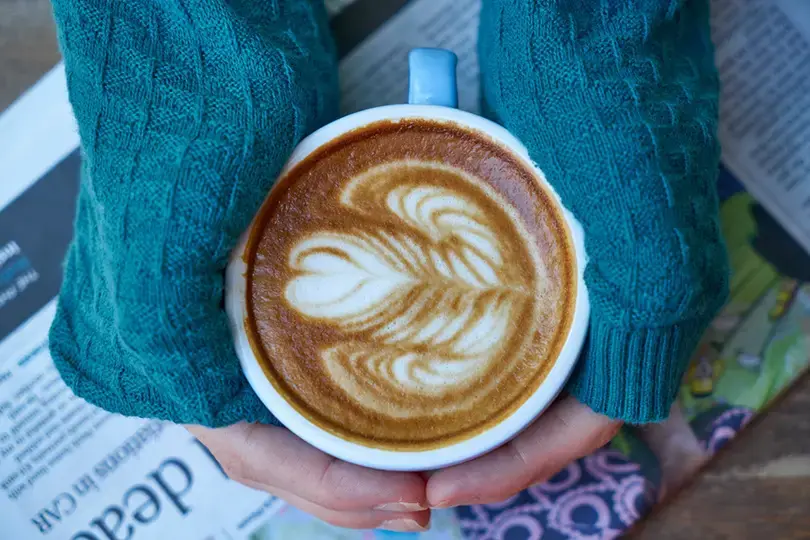
When the first rays of sunlight touch the rooftops by the ocean and the air still carries the coolness of night, a familiar aroma is already floating through the streets — a faint smokiness of freshly roasted beans. Here, coffee is not just a drink. It is a philosophy. A small personal ritual. A way to catch a moment before the world spins into the rhythm of highways and innovation.
The Birth of a Morning Philosophy
Mornings on the West Coast are never in a hurry. Even in cities where speed has become currency, there is always a moment of quiet — in a corner café, on a balcony overlooking the ocean, in a park under the trees.
Coffee here is not something people drink on the go. It is something they experience — like a short journey inward. This is the essence of the local lifestyle: not to run from life, but to pause in the very heart of it.
It All Started With Dreamers
The history of coffee here is not a business chronicle. It is the story of people searching for the taste of life — poets, students, artists, thinkers.
In the 1960s, the region lived at the crossroads of cultural and spiritual revolutions. On university campuses, protests against war and for free speech were shaping a new generation — and alongside banners and books appeared a new symbol of freedom: a cup of coffee.
Back then, the streets were filled with the aroma of fresh ground beans and big ideas. In small cafés people gathered who believed the world could change — and discussed how, over a steaming cup of black coffee. The café became a space for dialogue, where thoughts turned into movements and conversations into songs.
The Person Who Changed the Taste of America
Around that time, one roaster transformed the country’s approach to coffee. Coming from Europe with a suitcase and a belief that coffee deserved respect, he opened a small shop in California in the 1960s.
He did not simply sell coffee — he taught people to taste it. He shared why it mattered to know where beans came from, how they were processed, how they traveled from farm to cup.
He used to say:
“Good coffee is like an honest conversation — no rush, no pretense, made with soul.”
His approach was revolutionary. He introduced the idea of carefully sourced beans, darker roasting and coffee as craftsmanship rather than mass production. His philosophy shaped a generation of coffee lovers and later inspired the global wave of specialty coffee.
But he never chased scale. He believed in something deeper — that coffee was not about business, but about meaning.
Cafés as the New Cultural Spaces
The 1960s gave rise to a new tradition — cafés as spaces for ideas.
Writers, musicians and free thinkers came together in small coffeehouses that became cultural hubs. There, under the hiss of espresso machines, books were written, decisions were made and movements were born.
A café became a territory of quiet freedom. Not loud like a protest square, but intimate — a place where a person could sit alone and feel completely themselves.
That culture never disappeared. It simply evolved. Today it lives in light-filled roasteries by the ocean, in quiet minimalist coffee bars, in co-working cafés where laptops have replaced notebooks — but the spirit remains the same.
Coffee as the Language of the Coast
Coffee here became more than a beverage. It became a cultural language spoken from seaside towns to tech capitals.
Some roasters focus on flavor purity and simple rituals. Others highlight organic farming and environmental ethics. Some craft each cup individually — no drink ever made the same way twice.
Each coffee shop speaks in its own voice, but the message is always the same:
Pause. Feel. Think.
As one barista likes to say:
“We don’t sell coffee. We serve moments.”
Mindfulness in Every Drop
Coffee became part of a conscious lifestyle. Biodegradable cups, locally sourced beans, plant-based alternatives, sugar-free culture — all this is not a trend but a continuation of the same philosophy born decades ago: awareness, respect, choice.
Even coffee here is a form of ethics — not imposing, not moralizing, but deeply personal.
In some towns, cafés host silent mornings — hours of quiet when people drink coffee while simply listening to life around them. Others organize coffee meditations by the ocean. None of this is marketing. It is a way of life.
Coffee and the Road
Life here is always moving. But even on a long drive along the coast, there is always a place for good coffee.
Along scenic highways you’ll find tiny trailers where baristas hand-brew each cup. They know locals by name. Surfers grab cold brew before the waves, designers before work, founders before investor meetings.
Even drive-thru coffee isn’t about rushing here. It’s still a ritual — inhale, slow down, feel.
The Morning Philosophy
Every morning begins with the same question:
How do I want to live this day?
The answer is always the same — with a cup of coffee.
Because here, coffee is not a tool to wake up. It is a way to hear yourself.
One café owner by the ocean once said:
“People don’t come here for coffee. They come here for a feeling — the feeling that life is still beautiful.”
The Future Smells Like Roasting
Coffee culture here keeps evolving. Local innovators build smart coffee machines that analyze flavor preferences. Others experiment with sustainable beans and future farming. Technology and tradition blend — and through it all, coffee remains something that unites people.
Coffee, in this part of the world, is not just a drink. It is a way of living. It teaches you to slow down. To look wider. To breathe deeper.
To remember: if you’re holding a warm cup — your day has already begun well.