





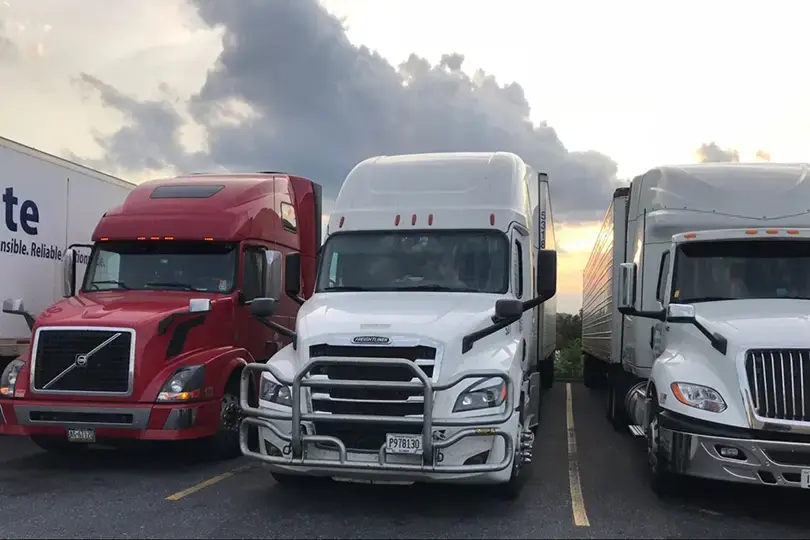
Imagine this scene. A large commercial truck is pulled over on a California highway. The officer asks the driver a few basic questions in English. Where are you going. What are you carrying. Do you understand the road signs you just passed.
This is no longer a hypothetical situation. California has quietly entered a new phase in regulating commercial trucking. English language skills are now being checked by the California Highway Patrol, and for many drivers, this changes everything.
From a Federal Order to Real Roadside Checks
Last year, President Donald Trump signed an executive order requiring all commercial truck drivers in the United States to have a working knowledge of English. The rule is simple in theory. Drivers must be able to read road signs, communicate with law enforcement, and complete official documents.
The order applies nationwide, but for months, California appeared reluctant to enforce it. The state has a long history of supporting immigrant workers and linguistic diversity. Many believed California would delay or soften the requirement.
That moment has passed.
According to local media, CHP officers have begun enforcing the rule during roadside inspections. There were no major announcements or press conferences. The checks simply started happening.
Quiet Enforcement With Serious Consequences
Drivers who cannot demonstrate basic English skills may now be placed out of service. This means they are temporarily removed from duty and cannot continue driving until the issue is resolved.
In practice, officers may ask drivers to explain their route, answer safety related questions, or respond to simple instructions. If communication breaks down, the result can be immediate removal from the road.
For truckers, this is not a warning. It is a real operational risk.
Why Authorities Say English Matters
Supporters of the policy argue that language is not about politics. It is about safety.
A fully loaded commercial truck can weigh tens of thousands of pounds. On busy highways, even small misunderstandings can lead to serious accidents. If a driver cannot understand an emergency instruction or a detour sign, lives may be at risk.
From this perspective, English is treated as a safety tool, just like brakes or mirrors.
A Trucking Industry Under Pressure
The timing of the new enforcement worries many in the logistics industry. Trucking companies across the United States already face a driver shortage. California, in particular, relies heavily on immigrant labor in transportation.
Industry experts warn that stricter language checks could temporarily remove thousands of drivers from the workforce. This could slow deliveries, increase shipping costs, and place additional stress on supply chains.
Some companies are responding quickly by offering English classes and training programs for drivers.
Immigrant Drivers Feel the Impact First
Many affected drivers come from immigrant communities, including Eastern Europe, Central Asia, and Latin America. Some have driven safely for years without major incidents.
For them, the new rule feels sudden and personal. Learning English while working long hours on the road is not easy. Still, many drivers admit that they now see language skills as unavoidable.
English is no longer optional. It is part of the job.
Is the Policy Fair
The debate is growing. Supporters say the rule creates a clear and equal standard for everyone on the road. Critics argue it places an unfair burden on experienced workers who already proved their driving skills.
As with many regulatory changes, the truth likely sits somewhere in between.
What is clear is that enforcement has begun, and the trucking industry must adapt.
For drivers, improving English skills may now be as important as renewing a license. For companies, investing in training could become a necessity rather than a benefit.
And for California, this shift signals a new approach. Quiet enforcement, real consequences, and a clear message. On American highways, communication matters.