





In early December, a science story quietly turned into something much bigger. It moved beyond research labs and academic journals and began to capture the attention of people far outside the scientific world. The reason was striking and almost cinematic. A space rock that traveled millions of miles brought back to Earth not just dust and minerals, but molecules that sit at the very foundation of life itself.
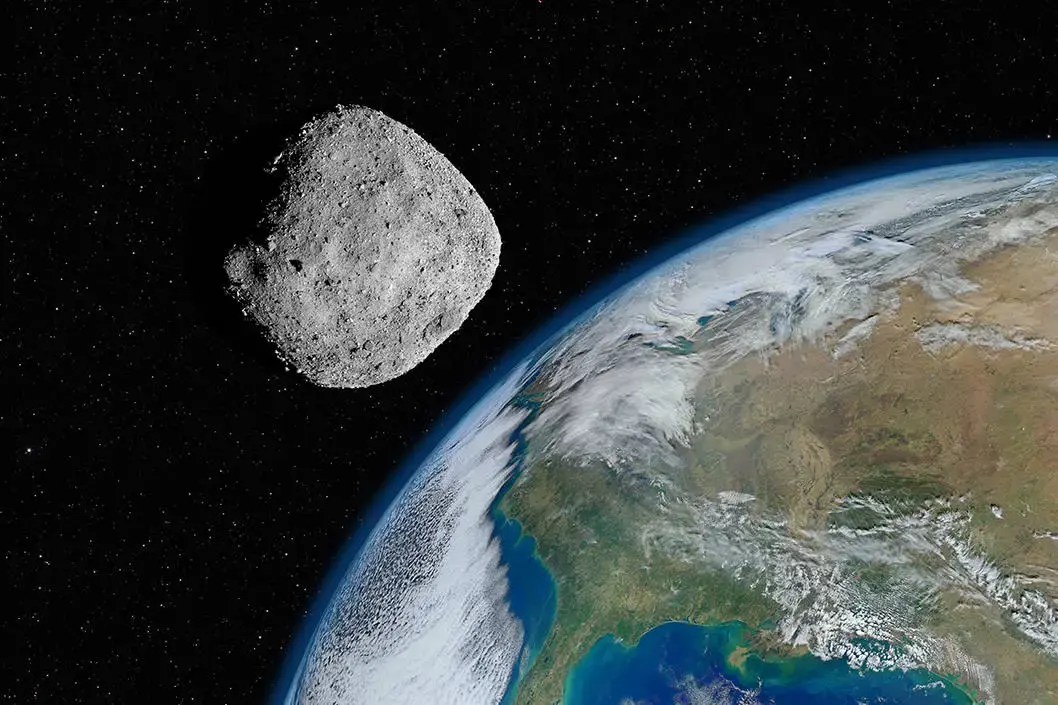
The story centers on the asteroid Bennu and NASA’s OSIRIS REx mission, one of the most ambitious space projects ever designed to bring material from an asteroid back to Earth. Inside those tiny samples, scientists found sugars that are essential to life as we know it. These were not signs of living organisms and not proof of alien life. Instead, they were something more basic and, in many ways, more important. They were the chemical building blocks that make life possible.
Bennu is not a dramatic object at first glance. It is about 1,600 feet wide and was discovered in 1999. For years, it was just one of many near Earth asteroids. But scientists chose it carefully because it has remained largely unchanged since the early days of the solar system. Studying Bennu is like opening a time capsule from more than four billion years ago.
In 2020, the OSIRIS REx spacecraft successfully collected material from Bennu’s surface. Several years later, those samples arrived on Earth, sealed and protected from contamination. What followed was an intense period of laboratory work, with researchers analyzing the material grain by grain.
On December 2, the results were published in two leading scientific journals, Nature Geosciences and Nature Astronomy. That is when the excitement truly began. Scientists confirmed the presence of ribose and glucose in the asteroid samples. To many people, these may sound like ordinary chemical terms. To scientists studying the origins of life, they are extraordinary.
Ribose is especially important. It is a key component of RNA. Many researchers believe RNA was the first complex molecule to appear on Earth, long before DNA and living cells. RNA can store information and help drive chemical reactions, making it a strong candidate for the first step toward life.
Researchers from Tohoku University in Japan pointed out that this discovery completes a critical picture. Earlier studies of Bennu samples had already revealed all five nucleobases that make up DNA and RNA, along with phosphates. With the discovery of ribose, scientists now see a complete set of ingredients needed to form RNA molecules.
In simple terms, Bennu contains all the main parts required to build the chemistry of life.
There was another surprising find as well. NASA scientists identified a strange sticky organic substance in the samples. Informally, some researchers have nicknamed it “space chewing gum.” This material is rich in oxygen and nitrogen and may have acted as a kind of chemical glue. One idea is that it helped different molecules stick together long enough for more complex reactions to occur.
To imagine this, picture the early solar system as a chaotic place filled with collisions, heat, and constant motion. In such an environment, molecules would often break apart before forming anything complex. A sticky substance that could hold molecules together might have made a big difference, increasing the chances that life forming chemistry could take hold.
Scientists are careful to be clear about what this discovery does and does not mean. It does not prove that life ever existed on Bennu. There is no evidence of organisms or biological activity. But it strongly suggests that the ingredients for life are common in space.
Harvard astrophysicist Avi Loeb says these findings support the idea that life may not be rare in the universe. If asteroids can naturally contain all the key components needed for life, then the conditions that led to life on Earth may not be unique.
For Californians, this story feels especially close to home. The state is a global center for space research, science, and innovation. Many of the ideas driving missions like OSIRIS REx are developed in California labs, universities, and tech centers. This discovery reflects the kind of curiosity and ambition that defines modern science.
There is also a deeper implication. Many scientists believe that billions of years ago, asteroids played a major role in shaping Earth’s future. Early Earth was hit repeatedly by space rocks, which may have delivered water and organic molecules. These impacts could have helped start the chemical processes that eventually led to life.
Seen this way, Bennu is more than just an asteroid. It is a messenger from the distant past, offering clues about how life on Earth may have begun and how similar processes could happen elsewhere.
As conversations about life beyond Earth continue to grow, discoveries like this bring the discussion back to solid scientific evidence. They show that the question is not just whether life exists somewhere else, but how naturally it can arise when the right ingredients come together.
The story centers on the asteroid Bennu and NASA’s OSIRIS REx mission, one of the most ambitious space projects ever designed to bring material from an asteroid back to Earth. Inside those tiny samples, scientists found sugars that are essential to life as we know it. These were not signs of living organisms and not proof of alien life. Instead, they were something more basic and, in many ways, more important. They were the chemical building blocks that make life possible.
Bennu is not a dramatic object at first glance. It is about 1,600 feet wide and was discovered in 1999. For years, it was just one of many near Earth asteroids. But scientists chose it carefully because it has remained largely unchanged since the early days of the solar system. Studying Bennu is like opening a time capsule from more than four billion years ago.
In 2020, the OSIRIS REx spacecraft successfully collected material from Bennu’s surface. Several years later, those samples arrived on Earth, sealed and protected from contamination. What followed was an intense period of laboratory work, with researchers analyzing the material grain by grain.
On December 2, the results were published in two leading scientific journals, Nature Geosciences and Nature Astronomy. That is when the excitement truly began. Scientists confirmed the presence of ribose and glucose in the asteroid samples. To many people, these may sound like ordinary chemical terms. To scientists studying the origins of life, they are extraordinary.
Ribose is especially important. It is a key component of RNA. Many researchers believe RNA was the first complex molecule to appear on Earth, long before DNA and living cells. RNA can store information and help drive chemical reactions, making it a strong candidate for the first step toward life.
Researchers from Tohoku University in Japan pointed out that this discovery completes a critical picture. Earlier studies of Bennu samples had already revealed all five nucleobases that make up DNA and RNA, along with phosphates. With the discovery of ribose, scientists now see a complete set of ingredients needed to form RNA molecules.
In simple terms, Bennu contains all the main parts required to build the chemistry of life.
There was another surprising find as well. NASA scientists identified a strange sticky organic substance in the samples. Informally, some researchers have nicknamed it “space chewing gum.” This material is rich in oxygen and nitrogen and may have acted as a kind of chemical glue. One idea is that it helped different molecules stick together long enough for more complex reactions to occur.
To imagine this, picture the early solar system as a chaotic place filled with collisions, heat, and constant motion. In such an environment, molecules would often break apart before forming anything complex. A sticky substance that could hold molecules together might have made a big difference, increasing the chances that life forming chemistry could take hold.
Scientists are careful to be clear about what this discovery does and does not mean. It does not prove that life ever existed on Bennu. There is no evidence of organisms or biological activity. But it strongly suggests that the ingredients for life are common in space.
Harvard astrophysicist Avi Loeb says these findings support the idea that life may not be rare in the universe. If asteroids can naturally contain all the key components needed for life, then the conditions that led to life on Earth may not be unique.
For Californians, this story feels especially close to home. The state is a global center for space research, science, and innovation. Many of the ideas driving missions like OSIRIS REx are developed in California labs, universities, and tech centers. This discovery reflects the kind of curiosity and ambition that defines modern science.
There is also a deeper implication. Many scientists believe that billions of years ago, asteroids played a major role in shaping Earth’s future. Early Earth was hit repeatedly by space rocks, which may have delivered water and organic molecules. These impacts could have helped start the chemical processes that eventually led to life.
Seen this way, Bennu is more than just an asteroid. It is a messenger from the distant past, offering clues about how life on Earth may have begun and how similar processes could happen elsewhere.
As conversations about life beyond Earth continue to grow, discoveries like this bring the discussion back to solid scientific evidence. They show that the question is not just whether life exists somewhere else, but how naturally it can arise when the right ingredients come together.
If the building blocks of life can travel through space and land on planets, then life may be a common outcome rather than a rare accident. Bennu’s story is still unfolding. Scientists will study its samples for years, possibly decades. Each new discovery adds another piece to the puzzle of our origins and makes the universe feel a little less empty and a little more alive.