



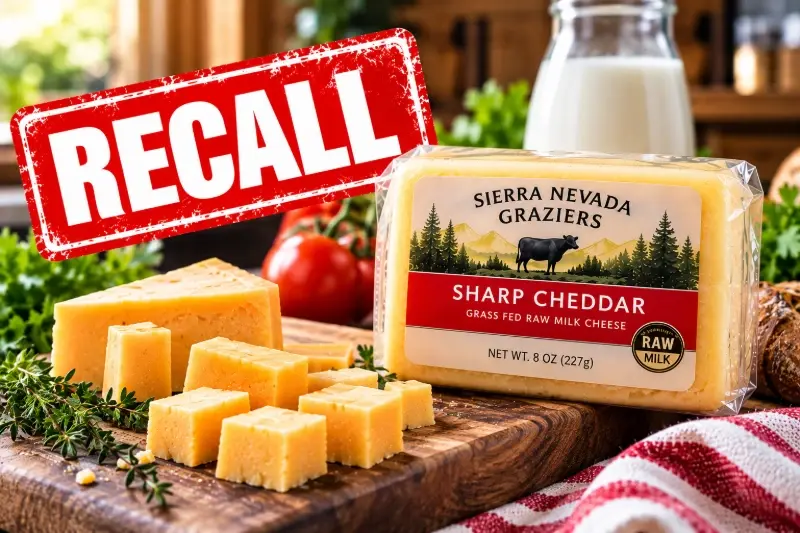
Check Your Fridge: Four Raw Milk Cheeses Recalled
A package of cheese sitting in the refrigerator has become the focus of a nationwide food safety warning.
The FDA and CDC are investigating an outbreak of E. coli O26 infections linked to Sierra Nevada Graziers grass fed raw milk cheese.
According to the FDA, 13 illnesses have been reported in nine states, including California. Eight people have been hospitalized, and three developed hemolytic uremic syndrome, or HUS, a serious condition that can damage the kidneys. No deaths have been reported.
The recall includes four Sierra Nevada Graziers varieties: Medium Cheddar, Sharp Cheddar, Jalapeño Jack and Monterey Jack.
The cheeses were sold nationwide at retail stores and online. Consumer packages were available in 8 ounce and 16 ounce sizes. Larger 5 pound loaves were also distributed to food service businesses and wholesalers.
The FDA is urging consumers to check both refrigerators and freezers because these cheeses can have a long shelf life.
Anyone who has a recalled product should not eat, serve or cook with it. The cheese can be thrown away or returned to the store for a refund.
If the cheese was removed from its original packaging and you cannot determine whether it is part of the recall, the FDA recommends throwing it away.
Consumers should also clean and sanitize containers, refrigerator shelves, cutting boards and other surfaces that may have touched the product.
Symptoms of an E. coli infection may include severe stomach cramps, diarrhea, fever, nausea and vomiting. Symptoms can begin within a few days of eating contaminated food, but in some cases they may appear as late as nine days afterward.
Certain E. coli infections can become serious and lead to bloody diarrhea, kidney complications and other health problems.
Anyone who ate one of the recalled products and develops symptoms should contact a health care provider.
The investigation remains active as officials work to determine how the contamination occurred and whether additional products may be affected.
For California families, the practical advice is simple: check the label before eating that cheese.
⚠️ Please share this information with friends and family who may have this product at home.